
📚 विज्ञान एवं प्रौद्योगिकी
📚 Science & Technology
इकाई 7 - विज्ञान, पर्यावरण एवं स्वास्थ्य
Unit 7 – Science, Technology, Health & Environment
इकाई 8 - अंतर्राष्ट्रीय, राष्ट्रीय एवं मध्यप्रदेश की समसामयिक घटनाएं
Unit 8 – Current Affairs
UNEP Emissions Gap Report 2026
UNEP Emissions Gap Report 2026
फ्री डेमो क्लास + पर्सनल मेंटरशिप पाएं
Get a Free Demo Class + Personal Mentorship
इंदौर की बेस्ट MPPSC कोचिंग के एक्सपर्ट फैकल्टी से जुड़ें
Learn MPPSC strategy from Indore's best MPPSC coaching faculty
📌
News Context
चर्चा में क्यों?
Why in News?
WHY
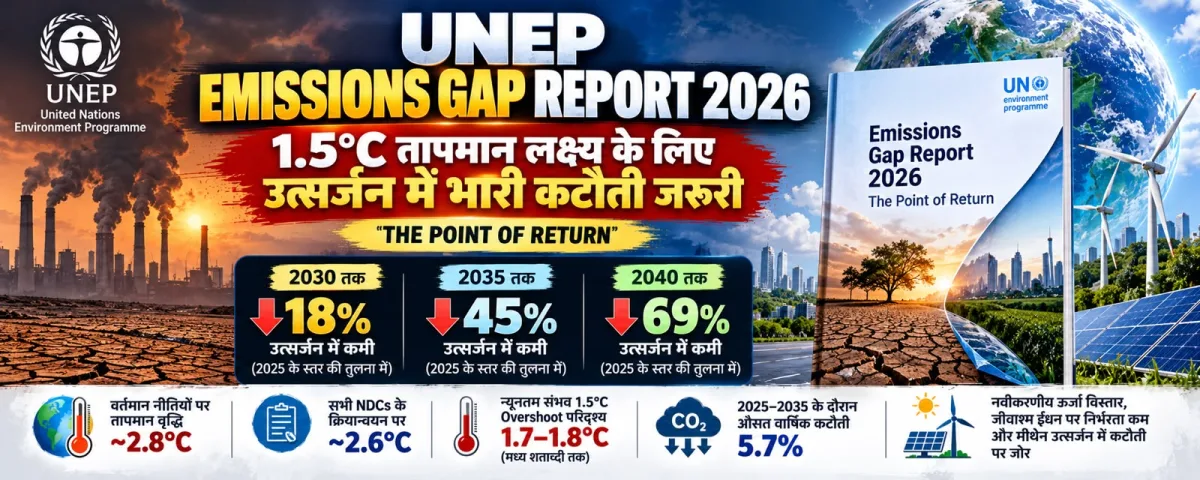
हाल ही में संयुक्त राष्ट्र पर्यावरण कार्यक्रम (UNEP) द्वारा Emissions Gap Report 2026: The Point of Return जारी की गई है। रिपोर्ट के अनुसार, वैश्विक तापमान वृद्धि को 1.5°C तक वापस लाने के लिए ग्रीनहाउस गैसों के उत्सर्जन में व्यापक और तेजी से कटौती आवश्यक है।
Recently, the United Nations Environment Programme (UNEP) released the Emissions Gap Report 2026: The Point of Return. According to the report, extensive and rapid reductions in greenhouse gas emissions are necessary to bring global temperature rise back to 1.5°C.
📖
Full Analysis
विस्तृत विश्लेषण
Complete Analysis
READ
रिपोर्ट के प्रमुख निष्कर्ष
(A) उत्सर्जन में कटौती के लक्ष्य
- वर्ष 2030 तक – वर्ष 2025 के स्तर की तुलना में 18% कमी।
- वर्ष 2035 तक – वर्ष 2025 के स्तर की तुलना में 45% कमी।
- वर्ष 2040 तक – वर्ष 2025 के स्तर की तुलना में 69% कमी।
(B) तापमान संबंधी अनुमान
- वर्तमान नीतियों के जारी रहने पर इस सदी में वैश्विक तापमान वृद्धि लगभग 2.8°C तक पहुंच सकती है।
- सभी राष्ट्रीय जलवायु प्रतिबद्धताओं (NDCs) के पूर्ण क्रियान्वयन पर भी तापमान वृद्धि लगभग 2.6°C रहने का अनुमान है।
- न्यूनतम संभावित 1.5°C Overshoot परिदृश्य में मध्य शताब्दी तक तापमान वृद्धि 1.7–1.8°C तक सीमित रखने तथा वर्ष 2100 तक इसे वापस 1.5°C या उससे नीचे लाने का लक्ष्य है।
(C) अन्य महत्वपूर्ण तथ्य
- 2025–2035 के दौरान वैश्विक उत्सर्जन में औसतन 5.7% वार्षिक कटौती की आवश्यकता होगी।
- कार्बन डाइऑक्साइड को वायुमंडल से हटाने और स्थायी रूप से संग्रहित करने की आवश्यकता भी होगी।
- रिपोर्ट में नवीकरणीय ऊर्जा के विस्तार, जीवाश्म ईंधन पर निर्भरता कम करने और मीथेन उत्सर्जन में कटौती पर जोर दिया गया है।
Emissions Gap क्या है?
Emissions Gap का अर्थ है – वर्तमान नीतियों एवं देशों की जलवायु प्रतिबद्धताओं के आधार पर अनुमानित वैश्विक ग्रीनहाउस गैस उत्सर्जन और पेरिस समझौते के तापमान लक्ष्यों को प्राप्त करने के लिए आवश्यक उत्सर्जन स्तर के बीच का अंतर।उद्देश्य: इस अंतर को कम करके वैश्विक तापमान वृद्धि को नियंत्रित करना तथा जलवायु परिवर्तन के दुष्प्रभावों को कम करना।Major Findings of the Report
(A) Emissions Reduction Targets
- By 2030 – 18% reduction compared to the 2025 level.
- By 2035 – 45% reduction compared to the 2025 level.
- By 2040 – 69% reduction compared to the 2025 level.
(B) Temperature Projections
- If current policies continue, global temperature rise could reach approximately 2.8°C during this century.
- Even with the full implementation of all national climate commitments (NDCs), temperature rise is projected to remain around 2.6°C.
- Under the minimum possible 1.5°C Overshoot scenario, the objective is to limit temperature rise to 1.7–1.8°C by mid-century and bring it back to 1.5°C or below by 2100.
(C) Other Important Facts
- An average annual reduction of 5.7% in global emissions will be required during 2025–2035.
- There will also be a need to remove carbon dioxide from the atmosphere and store it permanently.
- The report emphasizes the expansion of renewable energy, reducing dependence on fossil fuels, and cutting methane emissions.
What is the Emissions Gap?
Emissions Gap means the difference between the projected level of global greenhouse gas emissions based on current policies and countries' climate commitments, and the level of emissions required to achieve the temperature goals of the Paris Agreement.Objective: To control global temperature rise and reduce the adverse impacts of climate change by narrowing this gap.⚡
Quick Revision
याद रखने योग्य तथ्य
Key Facts to Remember
FACTS
1
रिपोर्ट का नाम: Emissions Gap Report 2026
2
जारीकर्ता: संयुक्त राष्ट्र पर्यावरण कार्यक्रम (UNEP)
3
शीर्षक: The Point of Return
4
प्रकाशन तिथि: 14 अक्टूबर 2026 (UNEP प्रकाशन सूची के अनुसार)
5
मुख्य विषय: वैश्विक ग्रीनहाउस गैस उत्सर्जन में कमी।
6
संबंधित समझौता: पेरिस जलवायु समझौता, 2015।
1
Report Name: Emissions Gap Report 2026
2
Released by: United Nations Environment Programme (UNEP)
3
Title: The Point of Return
4
Publication Date: 14 October 2026 (according to the UNEP publication list)
5
Main Theme: Reduction in global greenhouse gas emissions.
6
Related Agreement: Paris Climate Agreement, 2015.
MPPSC स्ट्रेटेजी को लेकर कन्फ्यूज़ हैं?
Confused about your MPPSC strategy?
हमारे मेंटर्स से फ्री में बात करें, सही रणनीति बनाएं
Talk to our mentors free and build the right preparation plan
अभ्यास प्रश्न (MCQ)
Practice MCQs
2 Questions · Test your understanding
1
प्रश्न 1
Question 1
Emissions Gap Report किस संस्था द्वारा जारी की जाती है? The Emissions Gap Report is published by which institution?
A
IPCC
IPCC
B
UNEP
UNEP
C
UNDP
UNDP
D
WMO
WMO
संयुक्त राष्ट्र पर्यावरण कार्यक्रम (UNEP) द्वारा Emissions Gap Report प्रकाशित की जाती है।
The Emissions Gap Report is published by the United Nations Environment Programme (UNEP).
2
प्रश्न 2
Question 2
Emissions Gap का सही अर्थ क्या है? What is the correct meaning of the Emissions Gap?
A
वनों के क्षेत्रफल में कमी
Decline in forest area
B
समुद्र के जलस्तर में वृद्धि
Rise in sea level
C
आवश्यक और अनुमानित ग्रीनहाउस गैस उत्सर्जन के बीच का अंतर
Difference between required and projected greenhouse gas emissions
D
नवीकरणीय ऊर्जा उत्पादन में अंतर
Gap in renewable energy production
यह पेरिस समझौते के तापमान लक्ष्यों को प्राप्त करने के लिए आवश्यक उत्सर्जन स्तर और अनुमानित उत्सर्जन के बीच का अंतर दर्शाता है।
It represents the difference between the level of emissions required to achieve the temperature goals of the Paris Agreement and the projected level of emissions.
0/2
Your Score